SCOTT v. McDOUGLE Consolidated · Tazewell-2 Supreme Court of Virginia Under advisement · No merits ruling Drafted 7 May 2026
Forecast brief № BF-VA-2026-04

Mid-decade redistricting · Virginia · Pending

SCOTT v.McDOUGLE the forecast.

The Virginia Supreme Court is sitting on the merits of a Democratic mid-decade power grab the voters narrowly approved 50.7-49.3 in a hastily-scheduled April 21 special election. Republicans have four independent procedural grounds to throw it out. They need to win on any one.

The call · Bearing Freedom forecast
v.1 · 26-05-07
STRIKE.
— leans yes, but only narrowly.
Strike
60%
Uphold
35%
Punt
5%
Aggregate scenario probabilities — BF Editorial
Margin of approval
~35,000
of 2.5M cast · 50.7-49.3
Hard deadline
25 May
Cong. candidate filing closes
Grounds to strike
4
Need to win on any one
Days argued
27 Apr
Same day as Fulton's investiture

90 Seconds.

Whether any of this is constitutionally fatal is a different question from whether it stinks. Both, in our editorial view, are on the table.

The work-around
2024

Special session called for a budget dispute. Never formally adjourned. Procedurally kept open into late 2025.

The wedge
Oct 24

Majority Leader Herring re-opens the dormant session and wedges in a completely different redistricting amendment.

The race
Oct 31
Jan 16

First passage. Second passage. The "intervening election" that was supposed to sit between them started six weeks early.

The vote
50.7%

Voter approval on April 21. Two days later Judge Hurley rules the entire result "ineffective." The state cannot certify.

Seven chairs.
Four to move.

Republican plaintiffs need four votes to win on any one of four grounds. The path of least resistance runs through Argument 2 — special-session scope — with McCullough as the most likely author of a narrow controlling opinion. Hover any chair for the read.

Lean strike
3
Kelsey · Russell · McCullough
(McCullough is keystone)
Toss-up
1
Chafin
(follows whoever McCullough follows)
Lean uphold
3
Powell · Mann · Fulton
(Mann is hardest to move)

Four arguments.
One is enough.

The arguments are conceptually independent. They rest on different constitutional provisions. A justice who rejects Argument 1 isn't committed to rejecting 2, 3, or 4 — and that's the structural fact that makes this case real.

01 Cleanest

Special-session scope

The 2024 special session was convened to settle a budget dispute. It was reopened more than a year later for a constitutional amendment that nobody contemplated when the session was originally called. Constitutional limits on special sessions exist precisely to prevent that bait-and-switch.

Why it matters
Doesn't require redefining "election." Doesn't depend on originalism. It just asks: did the GA comply with the constitutional rules governing special sessions? Hurley said no.
Likely author
McCullough — narrow, institutionally defensible, structural rather than originalist.
02 Broadest

Intervening-election timing

The Constitution requires "an election" between the two GA passages. Early voting for the November 4, 2025 election began September 19 — six weeks before the October 31 first passage. Hundreds of thousands of votes were cast in the supposed intervening election before the GA had taken the first vote that election was supposed to provide a check on.

Why it matters
The textualist hook with the most ideological gravity for the conservative wing. Forces a structural change: future amendments must be timed around the START of early voting.
Likely author
Kelsey — full Vlaming-style maximalist textualist treatment.
03 Narrowest

Publication / notice

Virginia constitutional amendment procedure requires notice of the special election be properly advertised by all of the state's circuit court clerks. Republicans argue this requirement was not satisfied uniformly across all circuits in the rushed timeline between January 16 second-passage and the April 21 referendum.

Why it matters
Least-discussed of the four arguments and least likely to be the controlling theory. But available as a fallback for any justice looking for a narrow reason to strike.
Likely author
A separate concurrence by Chafin or Russell as a backup ground.
04 Still live

Misleading ballot title

The ballot question asked whether the Constitution should be amended to "restore fairness" — language Judge Hurley found "flagrantly misleading." SCOVA expressly DECLINED to reach the merits in March, writing "It is the process, not the outcome, of this effort that we may ultimately have to address." The yes side prevailed, so the title argument is back on the table.

Why it matters
Aggressive read — requires the court to characterize the GA's drafting as legally deceptive. Least clean of the four.
Likely author
Could stand alone in Scenario F as a narrow strike that avoids the procedural-passage arguments entirely.
Republicans need 1 of 4. Democrats need 4 of 4. That asymmetry is the whole case.

A manufactured
emergency.

Every step pushed the boundary of the procedure as far as it could go. Three or four of those pushed boundaries are now live legal questions before the court.

2024
Special session convened to settle FY 25-26 budget dispute. Never formally adjourned.
Sep 19, 2025
Early voting begins for the November 4 House of Delegates regular election.
Oct 24, 2025
Majority Leader Herring introduces resolution to use the still-open 2024 session for a redistricting amendment.
Oct 27, 2025
House agrees to the resolution, 50-42.
Oct 28, 2025
Four Democrats introduce the amendment. Tazewell County lawsuit filed the same day.
Oct 29, 2025
Senate agrees, 21-17.
Oct 31, 2025
GA first passage. (Six weeks AFTER early voting started.)
Nov 4, 2025
House of Delegates election day — the supposed "intervening" election.
Jan 16, 2026
GA second passage of the amendment.
Jan 27, 2026
Judge Hurley rules the amendment void ab initio. Sped up his ruling specifically to beat a GA vote to move the case out of his court.
Feb 13, 2026
SCOVA stays Hurley's injunction, lets the referendum proceed — but reserves the merits.
Feb 18, 2026
RNC files parallel ballot-title petition.
Mar 4, 2026
SCOVA pauses the trial court's halt on election prep, lets early voting begin March 6 — but expressly declines to rule on the merits.
Apr 21, 2026
Voters approve the amendment 50.7-49.3 (about 35,000-ballot margin out of 2.5M cast).
Apr 22, 2026
Judge Hurley rules entirely for the RNC, NRCC, and Republican plaintiffs. April 21 votes "ineffective." AG Jones appeals.
Apr 27, 2026
SCOVA hears oral argument. Justice Fulton formally invested the same day.
Apr 28-29, 2026
SCOVA denies AG Jones's motion to lift Hurley's block on certification. The state cannot certify.
May 7, 2026
TODAY. No merits ruling. Brief drafted.
May 25, 2026
CONGRESSIONAL CANDIDATE FILING DEADLINE. Hard pressure point.

Seven reads.

The likely-vote reads below are informed analysis from public records, not inside information. They are most defensible for justices with deep records (Kelsey, McCullough, Powell, Mann) and least defensible for those with thin SCOVA records (Fulton).

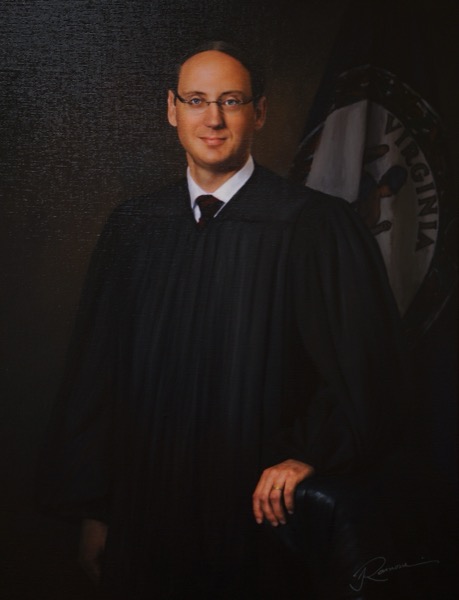
Seat №2
Official portrait of Justice D. Arthur Kelsey, Supreme Court of Virginia № 02 STRIKE
D. Arthur Kelsey
Associate Justice
Appointed Republican GA, 2015 (unanimous)
Term ends Jan 31, 2027
Mand. retire ~Oct 2034
Likely vote Strike Very High confidence

The court's most explicit originalist. Author of the Vlaming lead majority. Reappointment vote is in eight months under a Democratic GA — and that political pricing is already baked into how he'll write here.

The signal

  • Method: Virginia Constitution means what it meant at ratification. Built for the originalist read of "an election."
  • Reappointment Jan 31, 2027 under Dem GA — Democrats already presumed unwilling to reappoint. Vote is "free."
  • No ethical complaints. Ousting him would be the first partisan denial at the Supreme Court level since 1883.
What would change my read Almost nothing changes this read. Worst case for the strike side: the wing fragments and Kelsey writes in dissent rather than as part of a majority.
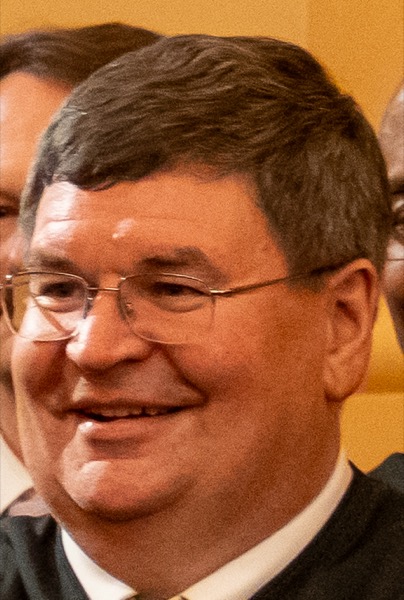
Seat №3
Official portrait of Justice Wesley G. Russell Jr., Supreme Court of Virginia № 03 STRIKE
Wesley G. Russell Jr.
Associate Justice
Appointed Divided GA, 2022 (Republican-side pick)
Term ends Jun 30, 2034
Mand. retire ~2043
Likely vote Strike (lean) Medium-High confidence

Cuccinelli's former Deputy AG for Civil Litigation. Argued the Cuccinelli-vs-UVA-climate-emails case for the Commonwealth. Joined Vlaming in full and joined Chafin's October 2025 contempt dissent. No reappointment exposure.

The signal

  • At oral argument: "voting and an election are not the same thing" — but this is stress-testing his own theory; even rejecting Argument 1 doesn't require an uphold.
  • Career arc as Republican-side state lawyer points strike. Eight years left in his term, no political need to pick a defining fight.
  • Most likely posture: joins Argument 2 majority; possibly writes separately to distance himself from Argument 1.
What would change my read A full uphold across all four grounds. Hard to imagine — they each rest on different constitutional provisions.
Seat №1
Official portrait of Justice Stephen R. McCullough, Supreme Court of Virginia № 01 STRIKE
Stephen R. McCullough
Associate Justice
Appointed Republican GA, 2016
Term ends Mar 2, 2028
Mand. retire ~2041
Likely vote Strike (lean) Medium-High confidence

The keystone vote. Textualist scholar who wrote "A Vanishing Virginia Constitution?" — but split from the conservative wing on the October 2025 contempt case. If the bloc holds, he authors. If he defects, the strike fails.

The signal

  • Joined the Vlaming majority in full — but went WITH the Powell-Goodwyn-Mann majority on the October 2025 contempt case while Kelsey, Russell, and Chafin dissented.
  • At oral argument: questioning described as "a grammar lesson" — close textualist work, historically correlates with strike when text supports.
  • Reappointment March 2028 under what is likely still a Democratic GA. Real institutional pressure for an off-ramp.
What would change my read A McCullough vote signal toward the 1912 deference line is the single most important thing to watch. If he goes that way, the strike collapses.
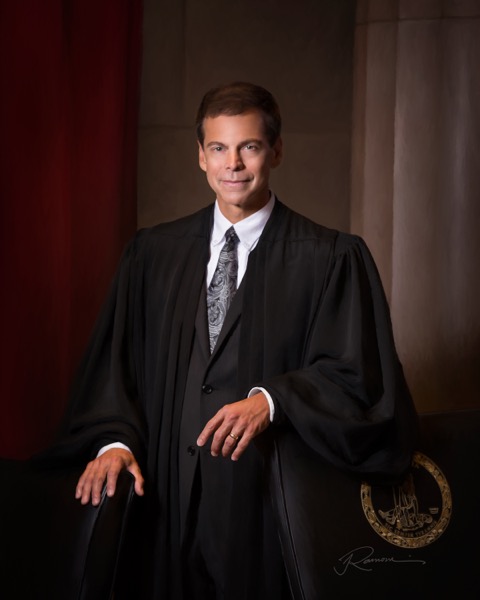
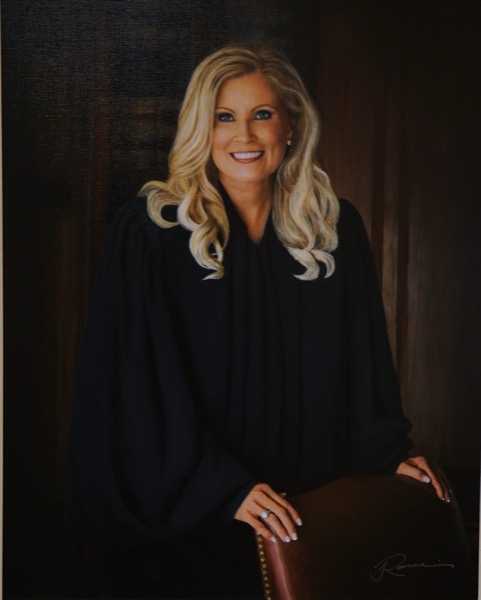
Seat №5
Official portrait of Justice Teresa M. Chafin, Supreme Court of Virginia № 05 TOSS-UP
Teresa M. Chafin
Associate Justice
Appointed Republican GA, 2019
Term ends Aug 31, 2031
Mand. retire Oct 4, 2028
Likely vote Toss-up Low-Medium confidence

The pivotal vote. Mild conservative with deep Tazewell County roots — Judge Hurley sits in her old circuit. Authored October 2025 contempt dissent. Mandatory retirement ~30 months from now: she has nothing to lose institutionally.

The signal

  • Sister of late Republican state Sen. Ben Chafin. Family network is firmly Republican; rural southwest Virginia social context expects strike.
  • Authored October 2025 dissent on deference-to-trial-court grounds — exactly the reasoning that supports giving Hurley's rulings their proper weight.
  • Two-and-a-half years from forced retirement at 73. Cuts both ways: free to vote her conscience, OR pulled toward institutional caution.
What would change my read If McCullough wobbles, Chafin probably follows him for a 4-3 uphold. If McCullough writes a clean Argument 2 opinion, she signs.
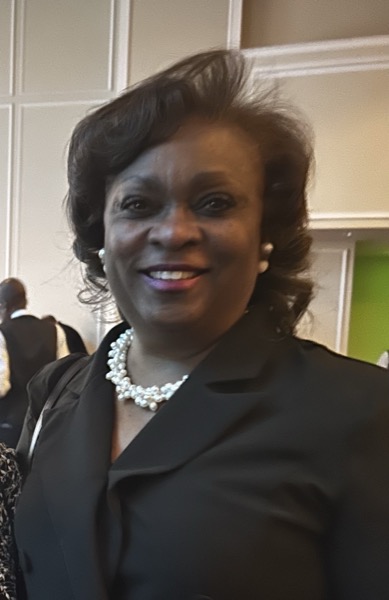
Seat №4 · Chief Justice
Official portrait of Justice Cleo E. Powell, Supreme Court of Virginia № 04 UPHOLD
Cleo E. Powell
Chief Justice
Appointed Republican GA, 2011 (Dem-registered consensus pick)
Term ends Jul 31, 2035
Mand. retire Jan 12, 2030
Likely vote Uphold High confidence

Center-institutionalist. Concurred in result but rejected the textualist methodology in Vlaming. Her CJ tenure caps at four years under mandatory retirement. Built to hold the line on institutional deference.

The signal

  • Authored the Vlaming concurrence rejecting the majority's "overt acts" limiting principle — proposed strict-scrutiny instead.
  • First African-American woman CJ in Virginia history. Strong institutional reasons not to define her tenure with a 4-3 nullification.
  • The 1912 deference line is in her judicial-temperament wheelhouse.
What would change my read Only realistic flip: she reads Argument 2 (special-session scope) as a pure separation-of-powers question, not a textualist one. No public signal so far.
Seat №7
Official portrait of Justice Junius P. Fulton III, Supreme Court of Virginia № 07 UPHOLD
Junius P. Fulton III
Associate Justice
Appointed Democratic GA, 2025
Term ends Dec 31, 2037
Mand. retire 2031
Likely vote Uphold Medium-High confidence

Newest justice. Formal investiture April 27 — same day as oral arguments. Elevated by the Democratic GA to replace Goodwyn (who concurred with Powell). His first major public act would be either ratifying or torching his patrons' signature legislative win.

The signal

  • Sworn in for SCOVA service Jan 1, 2026; only four months on the bench at oral argument.
  • Norfolk circuit roots. Drug-court rehabilitative-justice instincts; not a hard-line punitive jurist.
  • Did write a textualist statutory-construction opinion on the Court of Appeals — but that was a narrow plain-text read, not a methodological commitment.
What would change my read Real engagement at oral argument with the textualist hooks. None has been publicly reported.
Seat №6
Official portrait of Justice Thomas P. Mann, Supreme Court of Virginia № 06 UPHOLD
Thomas P. Mann
Associate Justice
Appointed Divided GA, 2022 (Senate Democrats' pick)
Term ends Jul 31, 2034
Mand. retire ~late 2030s
Likely vote Uphold High confidence

The cleanest Democratic-aligned vote on the court. Only true partial dissenter in Vlaming. His "as times change" framing is the antithesis of textualist reading on Argument 1.

The signal

  • Author of Vlaming partial dissent criticizing the majority's "super scrutiny."
  • Senate Democrats put him on the court specifically to be a vote like this one.
  • No appetite on his record for blowing up legislative work product.
What would change my read Essentially nothing. Safest "uphold" vote on the bench.
VI · The keystone vote

McCullough
is the case.

The single biggest analytical risk in this brief is over-reading Vlaming as a 4-3 voting bloc. It wasn't — outcome was effectively unanimous, methodology was 4-2-1. The only clean 4-3 outcome split available from the current court is the October 2025 contempt case, in which the conservative wing fractured: Kelsey, Russell, and Chafin dissented; McCullough went with the Powell-Goodwyn-Mann majority. That is the data point that keeps me from going higher than 60.

Tells he votes strike
  • Joined Vlaming majority in full.
  • Author of "A Vanishing Virginia Constitution?" (2012). The doctrinal premise here is his.
  • Argument 2 is built for him: narrow, structural, doesn't require redefining "election."
  • At oral arg: questioning described as "a grammar lesson." Close textualist work historically correlates with strike when the text supports.
Tells he defects
  • Split from the wing on the October 2025 contempt case.
  • Reappointment March 2028 under what is likely still a Democratic GA.
  • Historical preference for narrow rulings — and 1912 institutional deference IS a narrow ruling.
  • Scholarly persona is more academic than ideological. May not want to author a precedent of first impression.

Eight ways
this ends.

These are subjective probability estimates, not actuarial. The single biggest source of uncertainty is McCullough. Aggregate strike across all scenarios: ~60%. Aggregate uphold: ~35%. Punt: ~5%.

A

4-3 STRIKE on Argument 2

25%

Conservative wing holds. McCullough authors a narrow special-session-scope opinion. Powell, Mann, Fulton dissent. Pre-existing commission map is restored.

B

4-3 UPHOLD on 1912-line deference

25%

McCullough or Chafin defects. Kelsey writes a sharp dissent joined by the two non-defecting conservatives. Mid-decade map is used in 2026, 2028, 2030.

C

4-3 STRIKE, fragmented opinions

15%

Each conservative writes separately to flag preferred grounds. No single controlling rationale. Lower courts left to sort precedent.

D

4-3 STRIKE on Argument 1, broad Kelsey opinion

10%

Wing holds AND writes a Vlaming-style maximalist textualist opinion redefining "election." Less likely than A — requires McCullough to sign sweeping language.

E

5-2 UPHOLD

10%

Both McCullough AND Chafin defect on 1912-line grounds. Russell writes a textualist dissent joined by Kelsey. Cleanest "court upholds the will of the voters" outcome.

F

Ballot-title-only strike

5%

Court declines to reach the procedural-passage arguments and strikes only on the misleading-language ground. Plaintiffs win the case, lose the broader fight.

G

5-2 STRIKE

5%

Implausible but not zero. Would require Powell or Fulton to defect — most plausibly on the special-session-scope theory.

H

Procedural punt or remand

5%

Court avoids merits — possibly remanding for fact-finding or punting on standing. Filing-deadline pressure cuts hard against this.

Aggregate strike
60%
Aggregate uphold
35%
Aggregate punt
5%

Who answers
to whom.

Virginia is one of only two states where the legislature elects supreme court justices. The reappointment math actually pushes conservatives slightly TOWARD striking, not away.

Justice Term ends Mand. retire Decided by Pressure
Kelsey Jan 31, 2027 2034 Current Dem-majority GA · 2026 short session Maximum
McCullough Mar 2, 2028 ~2041 GA seated after Nov 2027 — likely still Dem High
Powell Jul 31, 2035 Jan 2030 N/A — retires before reappointment None
Chafin Aug 31, 2031 Oct 2028 N/A — retires before reappointment None
Russell Jun 30, 2034 ~2043 Far enough out None
Mann Jul 31, 2034 mid-late 2030s Far enough out None
Fulton Dec 31, 2037 2031 N/A — retires before reappointment None
The 144-year streak

No Virginia justice has been denied reappointment for partisan reasons since 1883. External pressure on Democrats not to retaliate is high — breaking the streak for Kelsey, a respected jurist with no ethical complaints, would invite legitimate accusations of court-packing. Internal incentive for Kelsey to vote his conscience is also high. If they're going to retaliate, they're going to retaliate. He may as well write the opinion he believes is correct.

Two forces.
Opposite directions.

The textualist methodology of Vlaming pushes the conservative wing toward strike. The 1912 line of institutional-deference cases pushes them toward uphold. The case turns on which gravity wins.

Push: Strike

The Vlaming coalition

Vlaming v. West Point School Board (302 Va. 504, 2023) was effectively unanimous on outcome but split 4-2-1 on methodology: Kelsey wrote the lead majority joined by McCullough, Chafin, and Russell on a Madisonian textualist methodology; Powell and Goodwyn concurred in result on strict-scrutiny grounds; Mann partially dissented.

What it shows: Kelsey, McCullough, Chafin, and Russell can hold together on a textualist methodology when the constitutional text supports it. The Republican arguments here are textualist — they ask the court to read constitutional procedural requirements according to their structural purpose, not their narrowest technical text.

What it doesn't show: a clean 4-3 voting bloc. Vlaming was an individual-rights case where ruling for the plaintiff felt principled and bounded. Scott v. McDougle nullifies the express will of 1.27 million voters and reshapes federal congressional representation for three election cycles. The institutional cost is dramatically higher.

Push: Uphold

The 1912 line

The 1912 cases counsel: the court does not intervene in the General Assembly's legislative process before laws are enacted; voters in a referendum function in a quasi-legislative role; the proper forum to challenge a referendum-enacted law is a substantive challenge to its operation, not a process challenge to how it got on the ballot.

This doctrine is bad for Republican plaintiffs. It is the strongest argument for an upholding 1912-style opinion that says the petitioners' grievances about pre-passage early voting may be valid concerns, but the proper remedy is political — not the invalidation of an election that has already been held and approved by 1.27 million voters.

If McCullough is going to defect from the conservative wing, this is the doctrine he will use as the off-ramp. But Argument 2 (special-session scope) gives the court a way to distinguish 1912 if it wants to: 1912 is about not pre-empting the GA's lawmaking work, not about insulating it from accountability when it violates explicit constitutional limits on HOW it conducts that work.

Things that
could break this.

Six known unknowns the model doesn't fully price.

01

An unnamed justice's wife died over the weekend before oral argument. Justice was present. Has not been reported as triggering recusal but may affect deliberation timing.

02

Both sides have institutional incentive to rule before May 25 candidate filing. A ruling that beats the deadline is more likely to be a clean Argument 2 strike than a complex multi-ground analysis.

03

The RNC's parallel Tazewell-2 petition is consolidated but presents some additional federal-voting-rights timing theories. A ruling could resolve one without resolving the other.

04

Even if SCOVA upholds, RNC-side actors are expected to file federal Elections Clause litigation. That track is independent of who sits on the Virginia Supreme Court.

05

Fulton was formally invested the same day as oral argument. He heard argument on the day he formally took his seat — unusual and adds an increment of vote-signal uncertainty.

06

Judge Hurley has now ruled against the amendment three times — Jan 2026, Feb 2026, and the April 22 post-vote certification block. He was appointed by Republican Gov. McDonnell in 2012. The trial-court record is entirely his work.

Between now
and the ruling.

Specific signals that, if they appear, will move our read.

  1. Any signal from McCullough Out-of-court speeches, law-review work, amicus invitations. He is the keystone.
  2. Whether Hurley issues further rulings His role as the trial judge whose work SCOVA is reviewing matters institutionally. Additional Hurley orders that SCOVA does or doesn't disturb are signal.
  3. Whether a ruling beats May 25 A pre-deadline ruling is more likely to be a clean Argument-2 strike (which gives clear marching orders — use the old map) than a complicated multi-ground analysis.
  4. Footnote-and-citation density of the eventual opinion Heavy citation to Vlaming and Madisonian originalism = Kelsey wrote it. Heavy citation to the 1912 line = McCullough or Powell wrote it.
  5. Russell's separate writing — or its absence If Russell concurs separately rejecting Argument 1 but joining on Argument 2, that's the strongest possible signal that the wing held but on the narrowest defensible ground.
Bottom line

It's going
down.

We think the amendment gets thrown out, but we are honest about the deck: institutional deference doctrine, no Virginia precedent for nullifying a statewide referendum on procedural grounds, and the political instinct of justices not to overturn a 1.27-million-voter election all push uphill against the challenge. The reason we still land on strike is the asymmetry: Republicans need 1 of 4 grounds. Democrats need 4 of 4. That's the case.

← Back to extras
Drafted 7 May 2026 · BF Editorial View the pre-vote brief · All extras